
Water Damage Restoration Chattanooga TN
NOAA radar recorded 1,207 hail signatures within about 15 miles of the metro center between 2021-2025 (2021: 170, 2022: 259, 2023: 400, 2024: 131, 2025: 247). The heaviest recent hail year around the valley was 2023, with 400 radar hail signatures inside a 15-mile radius, overwhelming roof lines and basement window wells. We provide rapid water extraction, structural desiccant drying, and verified moisture mapping to protect your property before secondary mold takes hold.
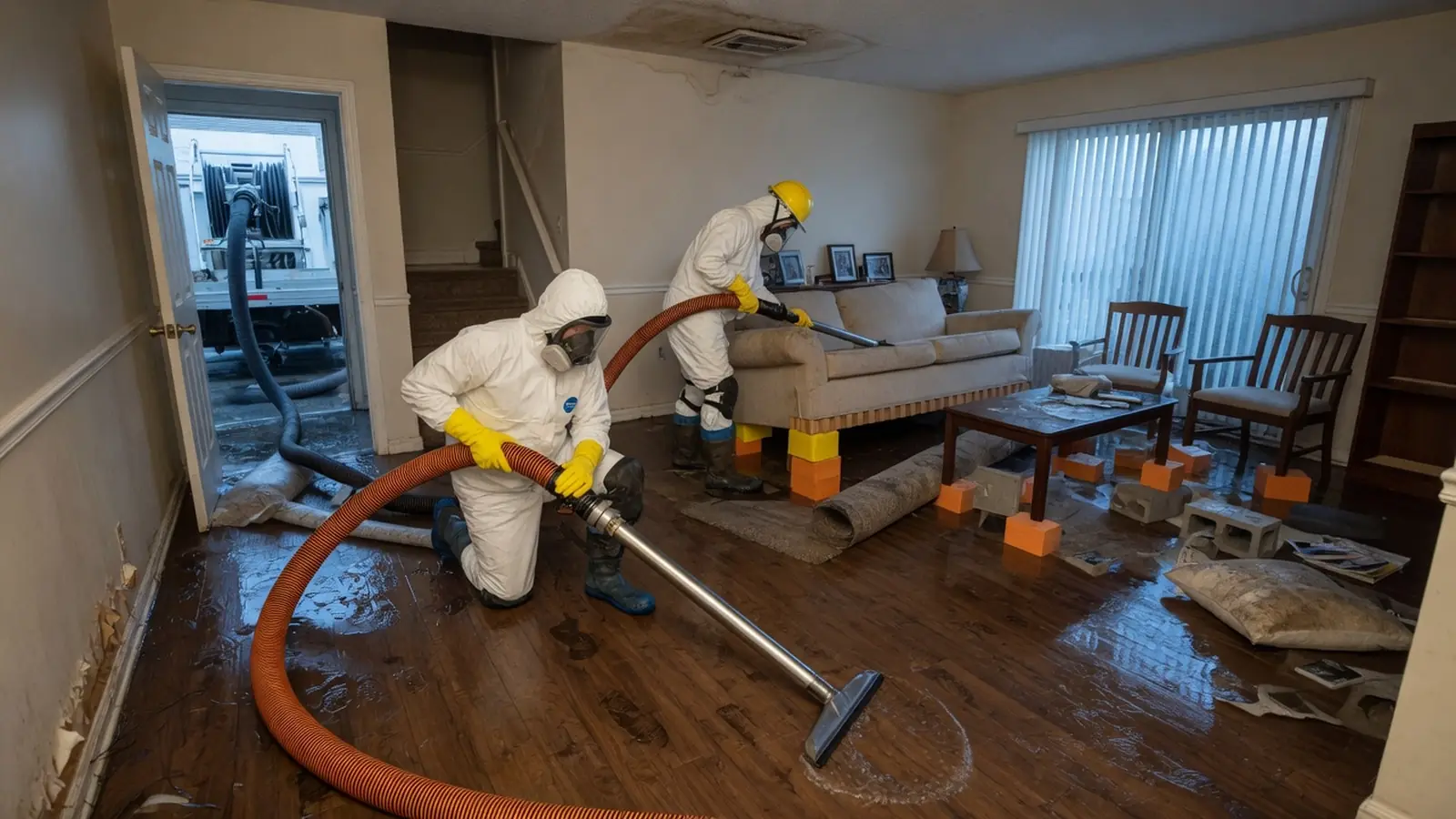
Precision Moisture Control And Structural Care
Navigating structural water extraction across steep foothill terrain requires specialized understanding of local ground conditions.
The single most extensive soil unit mapped across our local county (TN065) is the Bouldin-Gilpin complex, 20 to 60 percent slopes, covering about 22,493 acres.
These steep gradients funnel heavy runoff directly against foundation perimeters, saturating below-grade spaces rapidly.
Older homes with stacked stone foundations suffer from persistent crawl space moisture, leaving residents searching for practical ways to seal entry points and control humidity without steep contractor markups.
We specialize in resolving standing crawl space water under subfloors using high-capacity submersible pumps and industrial desiccant air movers.
About 32% of local housing units (27,478 of 86,238) were built before 1960, the era of galvanized steel supply lines and cast iron drains.
Our technicians use calibrated pinless moisture meters and thermal imaging cameras to verify that every joist returns to dry standard before equipment is pulled.
Rapid Extraction And Structural Dehumidification
When violent convective storm cells sweep across the valley, homeowners face severe crawl space humidity spikes and standing water after heavy rainfall, struggling to evaluate whether costly full encapsulation and sump pumps are necessary over basic vapor barrier repairs. We provide targeted emergency storm damage cleanup and structural drying to stabilize the structure immediately.
- Emergency Extraction And Hazard Mitigation. Deep floodwater pooling across dirt crawl space floors requires safe water extraction, thorough drying of saturated structural joists, and preventative measures against mold blooms. About 13% of housing units in the area (11,270 of 86,238) were built in the 1960s, overlapping the years aluminium branch wiring was installed, so our team always shuts down electrical hazard loops before deploying truck-mounted extraction units.
- Thermal Mapping And Moisture Profiling. Technicians inspect wall cavities and floor assemblies using non-invasive thermal imaging and resistance moisture probes to track water migration paths. About 23% of regional housing units (19,679 of 86,238) were built in the 1970s and 1980s, overlapping the years polybutylene supply piping was commonly installed, which frequently develops hidden pressurized micro-fractures inside enclosed wall voids.
- Controlled Evaporation And Environmental Stabilization. We place commercial low-grain refrigerant dehumidifiers and centrifugal air movers to draw bound water out of framing timbers. About 68% of homes locally (58,427 of 86,238) were built before 1980, the period when asbestos-containing materials and lead paint were still in use, requiring negative-air containment and certified mold remediation protocols for affected framing to prevent airborne particulate hazards.
- Daily Moisture Verification And Final Clearance. Our technicians record daily psychrometric readings, measuring relative humidity, grains per pound, and timber moisture content until assemblies reach equilibrium. Once dry standards are independently verified across every sill plate and subfloor sheet, drying logs are finalized for your records.
Pragmatic Mitigation Without Inflated Contractor Markups
Homeowners dealing with extensive crawl space mold struggle with exorbitant contractor quotes and uncertainty around whether aggressive abrasive blasting of floor joists is truly necessary. We believe in honest, proportionate remediation that stabilizes framing, treats active microbial growth with EPA-registered botanical antimicrobials, and avoids aggressive, high-cost demolition when structural assemblies can be dried and preserved.
Crawl Space Water Extraction
Rapid extraction of standing water from subgrade spaces using commercial submersible pumps and sludge vacs. We eliminate pooling water and sanitize dirt or concrete surfaces before mold colonies establish.
Structural Joist Dehumidification
Targeted drying of saturated floor framing, subfloor decking, and sill plates using industrial desiccant air movers. We monitor wood moisture content daily to ensure timbers dry completely to equilibrium.
Emergency Storm Flood Cleanup
Immediate response following severe rain and windstorms to extract water and secure the structure. We remove waterlogged porous materials and stabilize indoor humidity to prevent long-term structural decay.
Committed To Restoring Properties Safely And Thoroughly
We focus on rigorous psychrometric monitoring, rapid water extraction, and transparent communication throughout every stage of mitigation. Every structure is dried to verifiable baseline standards using commercial-grade drying equipment.
- 15Zip Codes Served
- 12Service Areas
- 3Services Offered
Local property owners rely on our certified technicians for rapid water removal and honest communication. Here is what residents have to say about their experience with our structural drying and cleanup team.
“Our previous restoration outfit walked away leaving sodden drywall and half-dried subfloor insulation behind. The crew stepped in, set up commercial desiccant units, and pulled hidden moisture pockets out of our framing within forty-eight hours. They completely turned around a disastrous situation with zero fuss.”
Marcus G.
“Getting a transparent itemized estimate right from the initial moisture assessment gave us instant peace of mind. The team stuck strictly to the written quote without tacking on mysterious emergency equipment surcharges at final billing. We knew exactly what we were paying for every single fan and dehumidifier.”
Elena V.
“Every evening before heading out, the technicians stacked cables neatly, vacuumed tracked-in debris from the hallway, and sealed off the drying zone with clean plastic barriers. Living in a home undergoing flood mitigation is exhausting, but their respect for our living quarters made it tolerable. You could actually walk through the house safely at night.”
Derrick K.
“Detailed morning text messages and timestamped thermal camera photos arrived every single day without me ever having to call. The crew explained daily moisture meter readings in plain English so we could watch the structural timbers dry down toward baseline. That level of proactive transparency is incredibly rare among contractors.”
Rachel P.
Frequently Asked Questions
How much does professional water damage restoration cost?
Professional restoration costs range between $1,200 and $4,500 depending on water category, affected square footage, and necessary drying equipment. Clean water leaks from supply pipes cost less to remediate than contaminated groundwater backups or structural crawl space flooding that demands extensive antimicrobial treatment and timber drying.
How long does the structural drying process typically take?
Structural drying typically takes three to five days under continuous operation of commercial desiccant air movers and refrigerant dehumidifiers. Dense hardwoods, saturated subfloor layers, and heavy framing joists can take slightly longer depending on ambient relative humidity and how deeply moisture penetrated before mitigation began.
Is aggressive abrasive blasting necessary for crawl space mold?
Aggressive abrasive blasting is only necessary when severe fungal roots penetrate deep into timber rather than remaining on joist surfaces. In most crawl space moisture scenarios, HEPA vacuuming combined with EPA-registered antimicrobial wash down and thorough dehumidification resolves mold safely without steep blasting fees.
Will homeowner insurance cover water damage restoration?
Standard policies cover sudden and accidental pipe bursts, while floodwater intrusion or gradual neglected leaks require separate endorsements. Our team documents moisture mapping logs, equipment runtimes, and thermal imaging records so you have full verification to submit directly to your insurance adjuster.
How do you determine when framing timbers are completely dry?
Technicians verify drying completion by taking daily pin moisture meter readings until structural wood reaches baseline equilibrium below 16%. We never guess based on surface appearance; psychrometric logs and comparative dry standards ensure no trapped moisture remains inside wall plates or joists.