
Chattanooga Crawl Space Water
Deep floodwater pooling across dirt crawl space floors requires safe water extraction, thorough drying of saturated structural joists, and preventative measures against mold blooms. Our dedicated restoration team responds promptly to pump standing water, monitor timber moisture levels, and protect your foundation from rot.
Call (423) 555-0140 when it's safe to go downstairs.
Prefer to talk? (423) 555-0140
Honest Solutions For Subfloor Flooding
Older homes with stacked stone foundations suffer from persistent crawl space moisture, leaving residents searching for practical ways to seal entry points and control humidity without steep contractor markups.
Homeowners often describe how surface rainwater runoff flowing toward the foundation creates standing crawl space water, prompting concerns on how to effectively pair exterior drainage channels with interior moisture mitigation.
A frequent pattern echoed in public discussions is that brush blockages in municipal drainage corridors and creeks back up excessive storm runoff into nearby residential properties during severe regional downpours.
When heavy weather overwhelms your subfloor, you can explore our complete approach to residential water damage restoration to see how our crew stabilizes foundations.
We inspect every pier and timber before recommending repairs so you never pay for unnecessary structural overhauls.
How We Clear And Dry Flooded Subfloors
Our crew follows a methodical protocol to eliminate standing water, extract trapped humidity, and restore structural integrity. If you suspect rising floodwaters accompanied high winds, you can learn how we handle severe structural storm damage before long-term decay sets in.
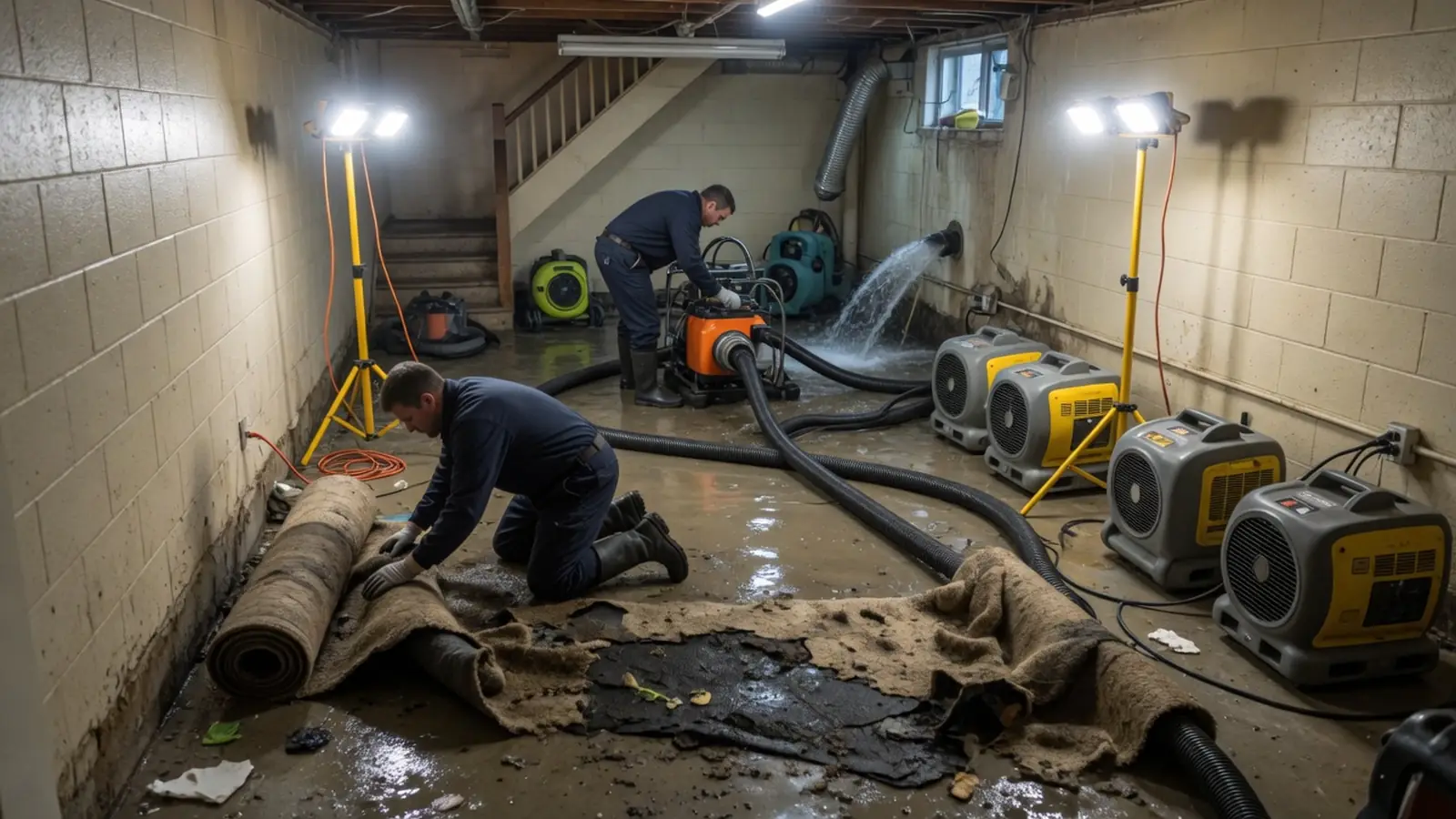
- Water Extraction And Pump Placement. Severe storms force groundwater to bubble up through the crawl space floor, which is frequently compounded by improperly positioned sump pump discharge lines dumping water back against the foundation. We deploy commercial submersible pumps to evacuate bulk water immediately and reroute discharge lines far beyond your perimeter footing.
- Structural Inspection And Drying. Homeowners often report that severe storms occurring right after purchasing a home expose hidden drainage defects, causing catastrophic basement and crawl space flooding that demands urgent structural drying. We place high-velocity industrial air movers and desiccant dehumidifiers across the substructure to pull moisture directly from saturated framing.
- Moisture Metering And Joist Sanitization. We continuously test timber moisture content until framing reaches safe equilibrium levels. To prevent active fungal growth on wet lumber, you can schedule professional mold remediation for damp crawl spaces to treat joists with an antimicrobial barrier.
- Long-Term Ground Vapor Management. Once joists and soil are completely dry, we assess the ground cover and install durable heavy-duty vapor barriers to prevent subsurface humidity from evaporating into the subfloor framing above.
Transparent Assessment And Lasting Protection
We believe in honest, practical moisture management tailored to your specific foundation. Our crew focuses on finding the direct source of intrusion, safely drying the framing, and applying proven preventative measures without pushing expensive unneeded add-ons. We stand behind our thorough drying protocol, verifying all timber moisture levels with calibrated meters before signing off on the job.
Groundwater Extraction
We remove standing floodwater from dirt and gravel crawl floors using heavy-duty submersible pumps and extraction equipment. Our team ensures water is discharged safely away from your foundation to prevent recirculation.
Vapor Barrier Restoration
Homeowners face severe crawl space humidity spikes and standing water after heavy rainfall, struggling to evaluate whether costly full encapsulation and sump pumps are necessary over basic vapor barrier repairs. We offer realistic assessments to help you choose sensible ground covering solutions that resolve moisture without inflated prices.
Joist Mold Prevention
Homeowners dealing with extensive crawl space mold struggle with exorbitant contractor quotes and uncertainty around whether aggressive abrasive blasting of floor joists is truly necessary. We provide targeted antimicrobial treatments and balanced drying methods that eliminate fungal risks effectively and affordably.
Our Commitment To Reliable Subfloor Recovery
We bring experienced moisture mitigation directly to local homeowners facing unexpected groundwater intrusion, delivering dependable drying without high-pressure sales.
- 16Zip Codes Served
- 6Service Areas
- 3Services Offered
Read authentic feedback from local homeowners who trusted our crew to pump standing water, dry saturated joists, and protect their foundations.
“When the municipal inspector flagged our crawl space after a storm, the crew stepped in immediately and addressed every ventilation and vapor barrier detail. They brought the entire subfloor into complete compliance with local building codes on the first visit. Passing the reinspection was completely stress-free thanks to their exact documentation.”
Marcus T.
“Daily photo logs and moisture readings were sent to my phone every afternoon without me ever needing to call for an update. The team documented the timber drying progress beneath the house step by step so I could see the moisture percentages drop. Knowing exactly what was happening gave our family tremendous peace of mind.”
Sarah B.
“Other contractors tried pushing an outrageously priced full encapsulation package, but this company explained why a reinforced ground barrier and targeted joist treatment were all we needed. Their honest guidance saved us thousands of dollars while still delivering dependable moisture control. Our subfloor has stayed completely dry ever since.”
Julian K.
“A tight two-foot access hatch made moving industrial drying equipment difficult, especially with torrential rain flooding the yard during setup. The crew adjusted their staging area, worked late into the evening to pump out standing runoff, and still finished drying the framing ahead of schedule. Their resilience under tough working conditions was exceptional.”
Elena R.
Frequently Asked Questions
How long does an open crawl space take to dry out after heavy rainfall, and will running household box fans underneath warp my subfloors?
Drying an open crawl space takes three to seven days, and uncalibrated household fans can unevenly dry subfloors, leading to wood cupping. Standard residential fans circulate humid air without extracting moisture from saturated timbers. Professional restoration utilizes commercial desiccant or refrigerant dehumidifiers and directed air movers to pull moisture safely from structural joists without causing differential warping.
How much does crawl space water extraction and drying typically cost?
Pumping standing water and drying framing typically ranges from one to four thousand dollars, depending on depth and contamination levels. Costs depend on water volume, access constraints, and whether timber requires antimicrobial treatment. Clear itemized estimates distinguish basic extraction and drying from optional long-term drainage upgrades.
How do older stacked stone foundations handle standing groundwater intrusion?
Stacked stone foundations let water seep freely through mortar joints, requiring dedicated perimeter collection and sump pumping systems. Historic masonry foundations in the regional valley settle over time, allowing hydrostatic pressure to push moisture into crawl spaces. Interior trenching and discharge management safely control this seepage without disturbing historic masonry.
Why does water bubble back up after my crawl space sump pump runs?
Water bubbles back when discharge lines exit too close to the foundation wall, allowing evacuated water to seep right back through the soil. Discharge piping should extend at least ten to twenty feet from the foundation or connect to an approved gravity drainage line to prevent creating a continuous recycling loop of groundwater.
How quickly can mold grow on saturated floor joists after a crawl space flood?
Mold spores can germinate on damp timber within twenty-four to forty-eight hours when relative humidity in the subfloor stays above seventy percent. Immediate extraction and high-capacity dehumidification lower relative humidity quickly, halting fungal development before mold colonies can degrade structural wood joists.