
Chattanooga Mold Remediation
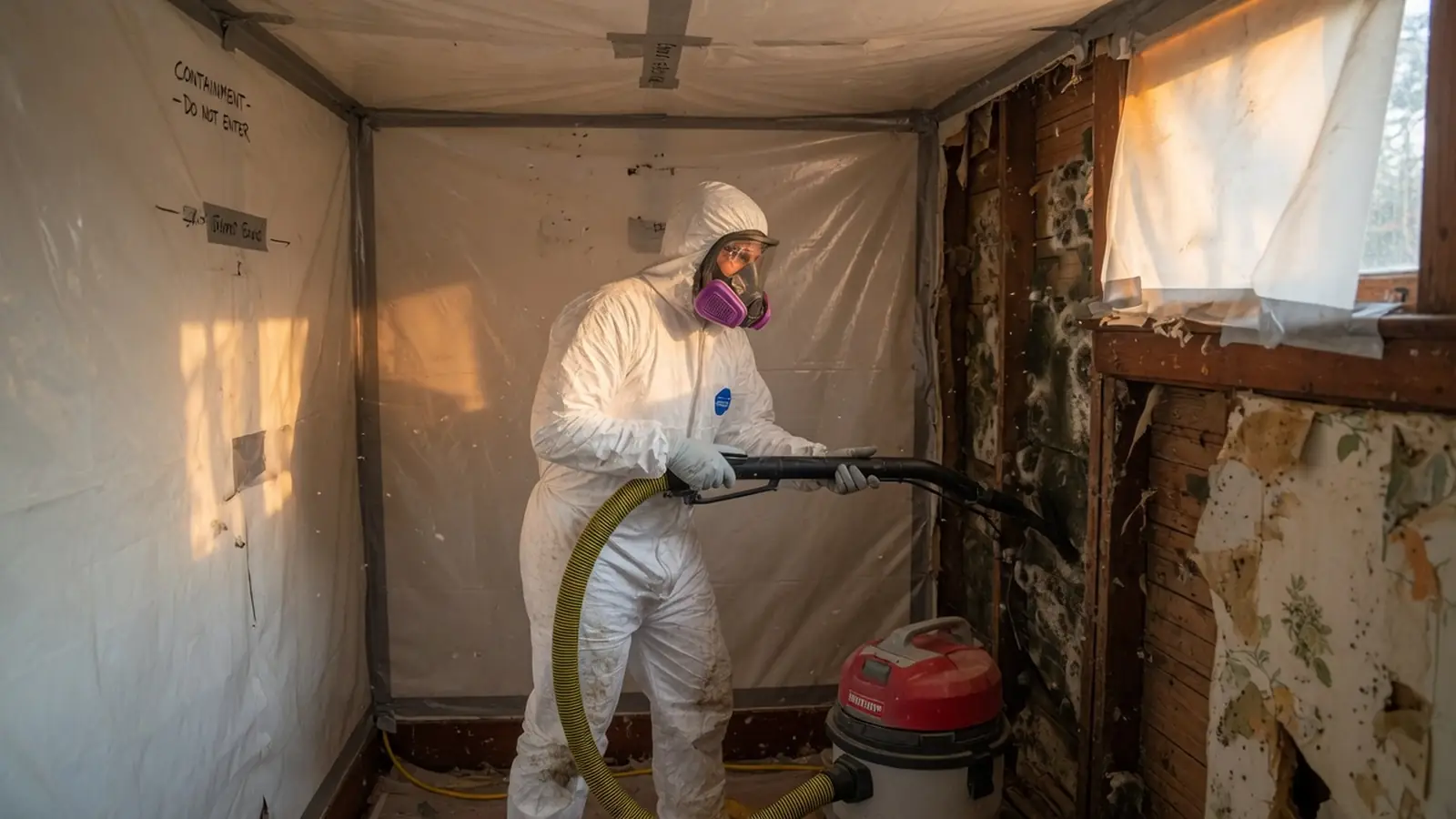
Active fungal growth compromises indoor air quality and damages structural framing when moisture remains unchecked. Our remediation crews isolate active mold colonies behind physical 6-mil poly barriers under negative air pressure with HEPA scrubbers to keep airborne fungal spores from migrating into clean living areas.
Ring (423) 555-0140 and we'll come take a look.
Prefer to talk? (423) 555-0140
Root-Cause Microbial Remediation
A pattern echoed in public discussions is that moisture trapped inside the home triggers spreading mold outbreaks, leaving homeowners uncertain about professional containment protocols and whether DIY antimicrobial treatments are adequate.
Many property owners question whether spraying household bleach kills toxic mold on porous structural wood framing, or does it leave the underlying root hyphae intact to regrow.
Sustained high summer relative humidity across the regional river basin frequently causes uninsulated subfloors above damp crawl spaces to cross the dew point, fueling hidden joist mold blooms.
Local housing data shows 86,238 housing units on record in the Census ACS 5-year estimates across neighborhoods like St. Elmo and Highland Park.
The median owner-occupied home locally was built in 1974 according to Census ACS 5-year benchmarks.
About 23% of housing units in the area (19,572 of 86,238) were built since 2000, so a substantial share of the local stock is still on its original systems.
When structural moisture precedes microbial growth, our comprehensive water damage restoration procedures eliminate standing moisture before colonies spread.
Our technicians physically remove colonized materials, HEPA-vacuum timber framing, and treat subsurfaces with commercial antimicrobials rather than superficial coatings.
Four Steps To Complete Mold Elimination
As homeowners often describe in local forums, deep floodwater pooling across dirt crawl space floors requires safe water extraction, thorough drying of saturated structural joists, and preventative measures against mold blooms. Our four-stage protocol guarantees that hidden moisture is eliminated and airborne contaminants are completely captured.
- Thermal Imaging And Moisture Mapping. We inspect structural cavities with calibrated moisture meters and infrared cameras to locate every hidden pocket of moisture feeding the growth.
- Containment And Air Scrubbing. Physical barriers and negative-pressure HEPA filtration isolate the work zone to prevent cross-contamination into clean living spaces during disturbance.
- Source Removal And Antimicrobial Treatment. Porous materials that cannot be salvaged are removed, while framing timbers are deeply HEPA vacuumed, hand-sanded, and treated with EPA-registered fungicides.
- Structural Drying And Verification. Commercial dehumidifiers pull moisture content down to safe equilibrium levels before post-remediation moisture testing confirms the structure is dry.
Uncompromising Environmental Standards
Homeowners frequently report that rapid waist-deep floodwater entering ground-floor living spaces requires urgent category-3 extraction and sanitization to halt fungal growth, which is why our emergency protocols for rapid floodwater extraction focus on immediate moisture removal. In addition, crawl space encapsulation and vapor barriers isolate subfloor structures from earth moisture, preventing framing rot and indoor humidity spikes. We execute remediation under strict containment without cosmetic shortcuts, guaranteeing that every treated structural member meets safe moisture standards.
Crawl Space Remediation
We extract standing moisture, clean colonized subfloor timbers, and install vapor barriers to protect foundations from ongoing subterranean ground moisture.
Attic And Roof Deck Mold Removal
Poor ventilation and roof condensation trap moisture in roof decking. We neutralize attic colonies and restore healthy airflow through the attic envelope.
Drywall And Cavity Remediation
When plumbing leaks or interior condensation trigger wall cavity outbreaks, we remove unsalvageable sheetrock and sanitize structural wall studs.
Our Commitment To Quality Environmental Remediation
We approach every mold project with disciplined containment, systematic moisture extraction, and verified clearance standards. Homeowners can expect thorough moisture mapping, complete structural protection, and transparent communication throughout the remediation process.
- 15Zip Codes Served
- 6Service Areas
- 3Services Offered
Read how local property owners resolved persistent structural moisture and stubborn fungal growth through our methodical containment and remediation work.
“Instead of tearing out all my subflooring, the crew explained why dry-ice blasting the joists and applying a commercial antimicrobial sealant would save thousands while preserving structural strength. They walked me through the durability of the vapor barrier they selected for the crawl space rather than pushing the most expensive system. My subfloor has stayed completely bone-dry through two humid summers now.”
Marcus B.
“Another contractor offered a lower quote to simply fog the crawl space without setting up plastic containment or addressing damp joists. The team took the time to explain why skipping negative air pressure would spread spores straight into our living room, so we hired them instead. Watching them set up 6-mil poly containment and HEPA filtration proved we made the right choice.”
Elena R.
“When our municipal building inspector flagged microbial moisture during a pre-sale walkthrough, the crew stepped in immediately with documented air-quality and moisture-content protocols. They handled the clearance documentation so thoroughly that the re-inspection passed without a single dispute or delay. That paperwork saved our closing date from falling through.”
Darren K.
“A musty smell suddenly intensified in our basement late on a Saturday night after heavy rainfall, and the crew answered my emergency call within minutes. A field lead talked me through shutting down the HVAC circulation immediately and had an inspection van at our door first thing Sunday morning. Having someone respond that quickly kept my family from panicking.”
Chloe T.
Frequently Asked Questions
How much does professional mold remediation typically cost?
Professional mold remediation typically ranges from $1,500 to $6,000 depending on containment size, structural damage, and moisture mitigation needs. Total costs depend primarily on square footage affected, whether subfloor framing requires specialized sanding, and the extent of required dehumidification equipment.
How long does the structural mold removal process take?
Standard containment and remediation projects usually take between two to five days to complete proper physical removal and air clearance drying. Timeframes vary based on structural moisture saturation levels, the size of physical containment barriers, and how long structural timbers require commercial drying.
Does spraying household bleach kill mold on structural framing timbers?
Household bleach does not kill fungal root hyphae inside porous wood framing, leaving underlying roots intact to bloom when humidity returns. Chlorine bleach remains on the surface while water penetrates the wood fibers, accelerating subsurface fungal regrowth rather than eradicating the colony.
Can I stay inside my home during professional mold remediation?
Homeowners can typically stay in unaffected areas when technicians isolate active work zones under negative air pressure with HEPA scrubbers. Physical 6-mil plastic barriers seal doorways and vents completely, preventing hazardous airborne spores and treatment vapors from migrating into living quarters.
Why does high regional humidity cause recurrent crawl space mold?
Sustained summer humidity causes uninsulated crawl space subfloors to cross the dew point, condensing ground moisture onto structural framing. Warm outdoor air entering foundation vents deposits heavy condensation against cool timber joists, fueling continuous fungal colonization unless isolated with vapor barriers.